I’ve sat on both sides of the table for over 12 years, as a candidate and as the person deciding who gets the offer. If you’re prepping with a generic list of project management interview questions, you’re already behind. Interviewers in 2026 aren’t testing whether you know what a Gantt chart is. They’re testing whether you can survive a Tuesday when three stakeholders escalate at once.
This isn’t another recycled list of typical project manager interview questions. It’s the actual bank I use to screen candidates, organized so you can find interview questions for project managers by category, industry, and seniority level, with the reasoning behind every answer, not just the words to say.
Here’s the exact framework that works: every strong answer has three layers. The mechanic (what you did), the judgment (why you chose it over alternatives), and the reflection (what you’d change). Miss the last two, and you sound like a textbook, not a PM.
The Questions You Should Prepare First
Below is your shortlist of the top 50 project management interview questions, ranked by how often I’ve actually asked them, with a framework for answering each in one line. Skim this table first. It’s the fastest path to a project manager interview questions and answers PDF-style cheat sheet (print or screenshot this section).
Not all questions carry equal weight. After 12+ years of conducting PM interviews, here is how I rank them by risk level, the ones where a weak answer immediately damages your candidacy.
| Risk Level | Question Type | Why It Matters Most |
|---|---|---|
| Critical | Behavioral (STAR) | Reveals real delivery capability, not theory |
| Critical | “Tell me about a project that failed” | Tests accountability and growth mindset |
| High | EVM / budget tracking | Shows financial PM maturity |
| High | Stakeholder conflict resolution | Proxy for executive communication skills |
| High | AI/GenAI literacy | 2026-specific filter for forward readiness |
| Medium | Methodology selection rationale | Agile vs. Waterfall vs. hybrid judgment |
| Medium | Multiple project management | Tests prioritization systems under load |
| Lower | Tool-specific questions | Usually covered with a brief examples list |
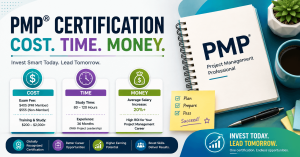
Explore whether pursing PMP cert is worth it or not: Is PMP Certification Beneficial? Advantages and Disadvantages in 2026
Detailed Foundational & Technical PM Interview Questions
These questions sound like warm-ups. They are not. Interviewers use them to calibrate whether your fundamentals are solid enough to trust your more complex answers.
What is a Work Breakdown Structure, and when would you use one?
Strong sample answer:
“A WBS breaks down the total scope of a project into deliverable-oriented components that are small enough to estimate, assign, and track independently. On a government infrastructure project I managed, the scope was so complex that our initial task list omitted roughly 30% of the required work. Building a proper WBS revealed those gaps before we signed the contract. We decomposed it down to work packages of no more than 80 hours. That single exercise saved us from a $200K scope dispute three months in.”
Walk me through Earned Value Management. What does it tell you that a budget tracker cannot?
Strong sample answer:
“EVM integrates scope, schedule, and cost into a single measurement. A budget tracker tells you what you’ve spent. EVM tells you what you’ve earned for that spend. On a $4M facility upgrade, our cost variance was only -$40K at month three. It looked fine on paper. But our schedule variance showed we were 12% behind earned value. That meant we were incurring costs on work that wasn’t delivering the planned output. We restructured two workstreams and recovered 9 of those 12 points before the critical path was threatened. Without EVM, we’d have called the project healthy right up until it wasn’t.”
Key formulas to know cold
- SV = EV – PV (Schedule Variance)
- CV = EV – AC (Cost Variance)
- CPI = EV / AC (Cost Performance Index)
- SPI = EV / PV (Schedule Performance Index)
How do you define project success beyond on-time and on-budget delivery?
Strong sample answer:
“I use a three-horizon model. Immediate: Did we deliver the agreed scope at the agreed cost and schedule? Medium-term: Are stakeholders actually using the deliverable six months after handover? Long-term: did the project realize its stated business benefits, revenue increase, cost reduction, risk reduction? I’ve delivered projects that scored perfectly on time and budget, only to sit unused because no one validated the requirements properly during planning. That’s still a failed project. Increasingly, I measure success by benefits realization, not just delivery metrics.”
Explain the Critical Path Method. Why is it important?
Strong sample answer:
The Critical Path Method (CPM) is a project scheduling technique used to identify the longest sequence of dependent activities that must be completed on time for the entire project to finish as planned. Any delay in a critical path task delays the project’s completion unless corrective action is taken. On a software implementation project, our testing phase became part of the critical path after a vendor integration slipped by two weeks. By reallocating additional QA resources and overlapping user acceptance testing with documentation, we recovered most of the lost time and delivered the project only three days behind schedule instead of the projected two-week delay. CPM helped us focus resources where they had the greatest impact rather than trying to accelerate every task.
Rapid-Fire Project Management Technical Questions
If you’re short on time or want a quick revision before your interview, use the rapid-fire questions below. They cover the technical concepts hiring managers frequently test. While these may seem like simple knowledge checks, interviewers are looking for more than textbook definitions. They want to see how you’ve applied these concepts in real projects.
| Question | Quick-Framework Answer | Why It’s Asked |
|---|---|---|
| What is a project charter and why does it matter? | Defines scope, sponsor, success criteria. I’ve had projects fail purely from a missing charter and unclear decision rights | Tests whether you formalize authority before work starts |
| Explain the project life cycle in your own words | Initiation → Planning → Execution → Monitoring & Controlling → Closure, with a stage-gate review at each transition | Baseline competency check |
| What is a WBS? | Deliverable-based scope decomposition into manageable work packages, not a project schedule. | Checks planning rigor |
| Explain Earned Value Management (EVM) | Measures project performance using CPI and SPI to evaluate cost and schedule efficiency. | Filters candidates who talk budget vs. those who measure it |
| How do you build a project schedule? | Critical path method, dependency mapping, buffer for the top 3 risks, not padding every task equally | Test sequencing logic |
| How do you manage quality on a project? | Quality plan tied to acceptance criteria, defined at charter stage, not bolted on at UAT | Distinguishes QA from QC understanding |
| How do you manage a project with unclear requirements? | Charter with assumptions log, iterative discovery sprints, sign-off gates before build | Test structure under ambiguity |
| How do you manage projects with competing sponsor priorities? | RACI clarity + escalation path defined before conflict happens, not during | Tests political navigation |
Get insights on the PMP exam details: ALL YOU NEED TO KNOW ABOUT PMP: Exam, Cost, Requirements, Worth etc
Behavioral & Leadership Interview Questions for Project Managers
In my experience, behavioral interview questions for project managers separate the doers from the talkers. I score these on specificity. Vague answers (“I communicate well”) are an instant red flag.
Q: Tell me about a time you had to lead a team through a project failure?
Sample answer: “A vendor integration I owned slipped 6 weeks because I hadn’t validated their API readiness in discovery. I owned it directly with the sponsor, rebuilt the schedule with a 15% buffer, and added a vendor-readiness checklist to my intake process. We haven’t had a repeat in 3 years.”
Q: How do you motivate a team that’s lost momentum mid-project?
Sample answer: “I break the remaining work into visible, shorter wins. A 6-month backlog feels different from three 2-week sprints with demo-able output. I also have 1:1s to find the actual blocker, which is usually unclear priorities, not lack of effort.”
Q: Describe a conflict with a difficult stakeholder?
Sample answer: “A VP wanted a feature added post-baseline without budget. I didn’t say no. I quantified the schedule and cost impact, presented three options (defer, reprioritize, add budget), and let them choose. Preserved the relationship and the plan.”
Scenario-Based Project Manager Interview Questions and Answers (The Ones That Actually Predict Performance)
Project manager scenario-based interview questions and answers are where most candidates fall apart, because there’s no memorized answer, only judgment.
Scenario: Your project is 30% over budget at the halfway mark. What do you do? Reforecast immediately using EVM data, not gut feel. Present the sponsor with a corrective action plan with 2–3 options (descope, re-baseline, add funding) within 48 hours. Never let a budget miss sit unaddressed for a status meeting cycle.
Scenario: A key team member quits mid-sprint. Next steps?
Triage their in-flight work same day, redistribute based on capacity, not seniority, and flag schedule risk transparently to the sponsor rather than absorbing it silently and letting it slip later.
Scenario: Two stakeholders give you contradictory requirements.
Don’t referee in email. Get both in a room, document the decision and rationale in writing, and route it through the change control process for traceability later.
How Do You Manage Multiple Projects Simultaneously?
This is the single most-searched cluster in this space: “how do you manage multiple projects simultaneously,” “how do you manage multiple projects,” “how to manage multiple projects,” and most candidates answer it with “I prioritize well,” which tells an interviewer nothing.
Here’s the exact framework that works for me across 15+ concurrent workstreams:
- Impact/urgency matrix: score every active project weekly, not just once at kickoff
- Fixed triage cadence: 30 minutes every Monday to re-rank, not ad-hoc firefighting
- Single source of truth: one dashboard (not five spreadsheets) showing status, risk, and next milestone per project
- Delegated decision authority: I don’t approve every change; PMs under me have thresholds (e.g., <$5K, <3 days schedule impact)
- Protected focus blocks: 2-hour deep-work windows shielded from context-switching
Sample answer: “I run six concurrent projects using a weighted scoring model, revenue impact, deadline proximity, and stakeholder visibility. I re-score every Monday during a 30-minute triage, delegate anything below a defined threshold to my leads, and maintain a shared dashboard so nobody asks me for a status update. They self-serve. Last quarter this cut my status-meeting load by 40%.”
Get insights on the latest PMP exam changes: PMP Exam 2026 Update: The Big Changes Every Candidate Must Know!
Agile, IT, and Construction Specifics
Industry context changes the right answer. Here’s how I adapt the same core questions:
| Context | Signature Question | What a Strong Answer Includes |
|---|---|---|
| Agile | Agile project manager interview questions often ask: “How do you handle a sprint that’s falling behind?” | Scope negotiation with PO, not silently extending the sprint; retro-driven root cause |
| IT | IT project manager interview questions and answers typically probe integration risk: “How do you manage a multi-system rollout?” | Phased cutover plan, rollback criteria, environment parity testing |
| Construction | Construction project manager interview questions center on safety and claims: “How do you handle an HSE incident mid-build?” | Immediate stop-work authority, incident report within regulatory window, root-cause review before resuming, subcontractor claims documentation to protect against disputes |
Risk, Stakeholder, Budget & Quality — Rapid Fire
| Question | Quick Framework |
|---|---|
| How do you build a risk register? | Identify → probability/impact score → owner → mitigation trigger, reviewed biweekly not quarterly |
| How do you manage a difficult sponsor? | Weekly async updates so surprises never happen live in a meeting |
| How do you cut budget without cutting quality? | Descope non-critical-path features first; protect the acceptance criteria tied to contract terms |
| How do you know a deliverable meets quality bar? | Acceptance criteria defined at charter stage, validated by the requester, not by me |
AI in Project Management (2026 Reality Check)
How AI and GenAI Are Changing Project Manager Interviews in 2026?
This is no longer optional preparation. Interviewers at mid- to large-sized organizations are explicitly testing AI literacy.
What you’ll be asked:
- “How are you currently using AI tools in your PM workflow?”
- “What are the risks of using GenAI for project documentation?”
- “If AI could handle 80% of your administrative tasks, what would you focus on?”
Why this matters: According to Gartner, by 2030, 80% of project management tasks will involve AI-powered assistance. PMI’s research already shows that AI-using organizations deliver 61% of projects on time, compared with 47% for those that do not use AI tools. Interviewers are aware of this gap and are screening for candidates who won’t resist the transition.
Strong answer framework for AI questions:
“I use AI tools for first-draft risk registers, meeting summaries, status report generation, and schedule variance analysis. What I do not delegate to AI is stakeholder judgment, conflict resolution, sponsor communication, and final sign-off on scope decisions. Those require human context, political, cultural, and contractual context that current AI tools cannot reliably hold. On the ethics side, I am careful about inputting sensitive project data into public GenAI models. For client-confidential projects, I use approved enterprise tools with data isolation or do not use AI at all for that content.”3
| The trap question: "Do you think AI will replace project managers?" |
|---|
| Correct framing: No, but it will replace PMs who refuse to work alongside it. The role shifts from administrative coordination to strategic orchestration. PMs who can interpret AI outputs, validate them against human judgment, and apply them to stakeholder realities will be significantly more effective than those who manage purely by instinct. |
AI ethics in practice: what interviewers want to hear:
- Awareness of data privacy in AI tool use
- Recognition of bias risk in AI-generated schedules and resource recommendations
- A clear line between AI-generated output and PM accountability for decisions
- Active upskilling rather than passive observation of AI adoption
Red Flags I Watch For (Interviewer’s Honest Take)
| Red Flag | What It Signals | Why It Concerns Me |
|---|---|---|
| “I’ve never had a project fail.” | Lack of self-awareness or possible fabrication | Every experienced project manager has encountered setbacks. I expect candidates to explain what they learned from failure, not claim perfection. |
| Blames the team for every failure | No accountability; likely to create culture problems | Strong PMs take ownership, analyze root causes, and focus on solutions rather than assigning blame. |
| Vague answers with no metrics | Experience may be shallow or poorly retained | Without measurable outcomes, it’s difficult to assess the candidate’s actual impact or verify their accomplishments. |
| Describes methodology obsessively | May be a process theorist rather than a delivery practitioner | Certifications and frameworks matter, but I hire project managers who can deliver results, adapt to change, and make sound decisions under pressure. |
| Can’t describe a difficult stakeholder situation | Either limited experience or avoiding the truth | Stakeholder conflict is inevitable. I want evidence that the candidate can navigate competing priorities, communicate effectively, and build consensus. |
| No answer on AI familiarity | Not keeping up with 2026 market expectations | Modern project managers are increasingly expected to understand AI-assisted planning, reporting, automation, and productivity tools, even if they aren’t AI specialists. |
| No questions for me at the end | Low genuine interest or under-prepared | Candidates who ask thoughtful questions typically demonstrate curiosity, preparation, and a genuine interest in the role and organization. Having no questions often suggests they haven’t researched the company or aren’t fully engaged in the opportunity. |
Questions to Ask Your Interviewer
Strong questions to ask project manager interview panels signal seniority:
- “What does project success look like here beyond on-time/on-budget?”
- “How much authority does this role have over budget reallocation?”
- “What’s the biggest project that’s failed here in the last two years, and why?”
Success Metrics, Project Closure & Lessons Learned Interview Questions
Most common interview questions for project managers list ignore this cluster, which is exactly why it’s a differentiator. I ask about closure because it reveals whether someone treats a project as “done when it ships” or “done when the organization has actually captured value.”
| Question | Quick-Framework Answer | Why It’s Asked |
|---|---|---|
| How do you measure project success? | Triple constraint plus benefits realization: did the business outcome the project funded actually materialize 90 days post-launch? | Tests whether “on time, on budget” is the whole answer (it isn’t) |
| Walk me through how you close out a project | Formal sign-off against acceptance criteria, resource release, contract/vendor closure, final budget reconciliation | Checks for process discipline beyond delivery |
| Tell me about a lesson learned you’ve applied since | I keep a personal “post-mortem log”. One is a stakeholder-mapping habit I now do in week one of every project, after missing a hidden approver on a prior rollout | Tests whether reflection changes behavior |
| How do you handle a project that technically succeeded but stakeholders were unhappy? | Separate the delivery outcome from the experience. I now run a mid-project “temperature check” survey to catch dissatisfaction before go-live, not after | Tests emotional intelligence beyond metrics |
Sample answer (success metrics): “I define success at charter stage across three layers: delivery metrics (schedule/budget variance), quality metrics (defect rate, acceptance pass rate), and business metrics (adoption rate, ROI at 90 days). On my last platform migration, we hit 100% on delivery metrics but adoption lagged, so now I build a change-management workstream into every project plan, not as an afterthought.”
Your 30-Day PM Interview Preparation Framework
Interviewing for a PM role without structured preparation is the same mistake as delivering a project without a schedule. Here is the framework I’d use if I were preparing today.

Days 1–7: Story Bank
Write out 12–15 STAR stories covering: a project failure, a difficult stakeholder, a budget overrun, a scope change, a team conflict, a successful delivery, a risk that materialized, and a decision made under incomplete information. Quantify every result. These stories are your raw material for every behavioral question.
Days 8–14: Technical Refresh
Review EVM calculations until you can do them cold. Refresh your knowledge of WBS, risk matrix scoring, change control processes, and critical path method. If you are applying to agile environments, review the Scrum framework, Kanban principles, and SAFe if relevant.
Days 15–21: Industry and Company Research
Read the job description three times and map every requirement to a story in your bank. Research the company’s current projects, delivery challenges, and technology stack. Identify which methodology they likely use, and prepare answers that reflect their context rather than a generic one.
Days 22–28: AI Fluency
If you are not currently using any AI tools in your workflow, start. Even a week of using AI for meeting summaries and status reports gives you a credible, honest answer. Prepare your AI ethics position, in which you draw the line between AI-generated decisions and human accountability.
Day 29–30: Rehearsal
Record yourself answering your five highest-risk questions. Watch them back. Cut anything that exceeds 90 seconds per answer. The goal is dense, specific, and confident, not comprehensive.
Frequently Asked Questions
What is the STAR method for project manager interviews, and when should I use it?
STAR stands for Situation, Task, Action, Result. Use it for every behavioral question — any question beginning with “tell me about a time” or “describe a situation when.” Structure your answer by naming the context briefly (1–2 sentences), stating your specific responsibility, describing what you did and why, and ending with a quantified outcome and a reflection on what you learned. STAR answers should run 60–90 seconds in conversation.
What are the most common project manager interview questions for technical PM roles?
Technical PM interviews typically focus on: EVM and budget control methods, risk identification and mitigation frameworks, managing third-party dependencies, experience with specific PM tools (Jira, MS Project, Smartsheet), change control processes, and scope management under fixed-price contracts. For IT roles specifically, expect questions about system integration dependencies, release management, and working alongside engineering leads.
How do I answer “Tell me about a project that failed” without hurting my candidacy?
Choose a real failure in which you played a direct role. Own the cause specifically and without qualification. Describe the immediate damage. Then spend equal time on the behavioral change you made afterward and a specific example of where that change produced a better outcome. Interviewers are not penalizing you for having a failure; they’re evaluating whether you learned from it. The candidate who fabricates a non-failure is more concerning than the one who owned a real mistake.
How are AI questions showing up in project manager interviews in 2026?
Interviewers are increasingly asking how candidates currently use AI tools in their workflow, how they manage the ethics and data privacy concerns of AI use, and whether they understand the difference between AI assistance and AI replacement of PM judgment. According to PMI research, organizations actively using AI-driven PM tools deliver projects on time at a 14-percentage-point higher rate than those that do not. Expect this gap to intensify hiring pressure on AI-aware candidates.
What questions should I ask the interviewer at the end of a PM interview?
Ask questions that reveal delivery reality, not questions answered on the website. Strong options include: the most common failure mode for projects in this organization, how portfolio prioritization decisions are made, the current state of PM tooling and AI adoption, and what happened to the last person in this role. These questions signal strategic thinking and genuine due diligence.
What do agile project manager interview questions look for compared to traditional PM interviews?
Agile PM interviews emphasize empirical process control, team facilitation over task management, and continuous delivery over milestone-based planning. Expect specific questions about how you protect sprint commitments from stakeholder interference, how you balance product backlog health with sprint goals, your experience with retrospectives and what changed as a result, and your ability to apply agile principles in hybrid or scaled environments (SAFe, LeSS). The biggest differentiator: can you show that agile produced measurable delivery improvement, not just that you followed the ceremonies?