Want to advance your career in project management? How to get PMP certification is one of the most common questions project managers ask when they’re ready to take the next big step in their careers. If you have managed projects and now want proof that your skills meet global standards, this guide is for you. Today, more than 1.5 million professionals worldwide hold an active PMP certification, a number that continues to grow each year. That demand speaks volumes about how valuable PMP has become in validating leadership, credibility, and project delivery across industries.
Here, you’ll find a step-by-step guide that makes the entire process clear, from requirements to renewal. By the end, you’ll know exactly how to earn PMP certification and keep it working for your career.
What Is PMP Certification?
The Project Management Professional (PMP) certification, issued by the Project Management Institute (PMI), is a globally recognized credential that demonstrates your ability to lead projects and manage diverse teams across industries. It is designed for experienced project managers who want to demonstrate proven expertise in people, processes, and business environments.
PMP certified your ability to:
- Lead and inspire project teams
- Manage stakeholders effectively
- Deliver technical outcomes on time and within budget
To learn more about the PMP certification details, check out: ALL YOU NEED TO KNOW ABOUT PMP: Exam, Cost, Requirements, Worth etc
Is PMP Certification Worth It For Your Career?
It sure can be! PMP certification boosts project credibility and shows readiness for leadership roles. It demonstrates to employers and clients that you can guide complex initiatives, manage diverse stakeholders, and deliver measurable results that align with business objectives. To put it simply, it can accelerate your career. Here is more insight into how this certification can do that:
- Leadership Edge:
It highlights your ability to manage teams, negotiate with stakeholders, and lead projects that directly influence business growth.
- A credential that signals trust at the executive table:
The PMP certification can be a fast track to the executive team, as it demonstrates to them that you understand how projects align with business strategy. Organizations see certified managers as safer bets for high-stakes initiatives because they come trained in proven practices.
- Proof of adaptability across industries:
Unlike many certifications limited to one field, PMP travels well. It is as valuable to someone leading a fintech product launch as it is to someone managing a multi-million dollar infrastructure build. This adaptability makes it one of the few credentials that consistently hold value when professionals switch industries.
- A ticket to faster career acceleration:
Recruiters often use PMP certification as a filter for senior roles. According to PMI, 80% of high-performing organizations require PMP-certified managers for key projects, meaning that without it, your resume might never reach the shortlist.
- Confidence in leading complex projects:
Beyond financial perks, PMP equips professionals with frameworks to manage uncertainty, balance competing priorities, and keep projects aligned with organizational goals. The certification assures employers that you can deliver results even when challenges stack up.
- A measurable income advantage:
PMI’s 2023 Earning Power Salary Survey found that PMP-certified professionals earn up to 33% more than those without it. This pay gap highlights how employers view certification as an indicator of readiness for responsibility and higher-value projects.
Find out more about PMP benefits and pitfalls: Is PMP Certification Beneficial? Advantages and Disadvantages in 2026
How Does PMP Certification Add Value Across Different Industries?
Technology and IT
PMP equips managers to handle complex rollouts like cloud migrations or enterprise software deployments, where aligning multiple teams and vendors is critical. Certified managers are trusted to minimize disruption while still meeting aggressive timelines. According to Standish Group’s CHAOS Report, only 31% of IT projects finish on time and on budget. PMP frameworks directly target these failures.
Construction and Engineering
In industries where delays can cost millions, PMP-trained leaders apply scheduling tools and risk frameworks to keep projects on track. Certification often reassures stakeholders that safety, compliance, and budget controls won’t be compromised. McKinsey research shows that large construction projects typically take 20% longer than scheduled and run up to 80% over budget. This is a gap that PMP practices help reduce.
Healthcare and Life Sciences
Professionals with the PMP certification bring order to regulatory-heavy projects such as implementing electronic health record systems or managing clinical trials. This credential demonstrates your ability to balance patient safety, compliance, and timelines simultaneously.
Finance and Consulting
In fast-moving client-facing industries, PMP helps professionals manage change programs and transformation initiatives. Certification tells clients that their consultants can keep high-value projects aligned with strategic business outcomes. Deloitte found that 70% of large-scale digital transformations fail to meet goals, a risk that PMP-certified leaders are specifically trained to mitigate.
This adaptability across industries is what gives PMP such staying power. No matter where you work, the credential proves you can connect strategy with execution.
PMP Eligibility and Requirements: What Do You Need In 2026?
Before you dive into how to get certified in project management, you need to make sure you actually qualify. The Project Management Institute (PMI) has three main eligibility tracks depending on your education level.
| To qualify for the PMP in 2026, you need either a secondary degree (high school diploma, associate’s, or global equivalent) + 60 months leading projects and 35 hours of project management education. |
PMP Certification Requirements: High School Diploma, associate’s degree
- The candidate must possess a minimum of 5 years (60 months) of separate professional project management experience.
- They must have achieved 35 hours of formal project management education.
PMP Certification Requirements: Bachelor’s degree or global equivalent
- The candidate is required to have at least 3 years (36 months) of separate professional project management experience.
- They also should have gained 35 hours of formal project management education.

PMP Eligibility Checklist
0/8Want something handy? Download our free PMP Eligibility Checklist to tick off requirements as you prepare.
How Do You Apply For PMP Certification in 2026?
| To apply for PMP, create a PMI.org account, complete the application with verified project hours and training records, submit for review, respond to any audit, pay exam fees, and schedule your test within the one-year eligibility window. |
Not sure how or where to start? Here is a step-by-step PMP application guide to make things clearer:
Step 1: Create a PMI account
This is the first step in your journey. Start at PMI.org. Your account is the hub for everything: your application, payments, and exam scheduling. Using the official portal also ensures your data is secure.
Step 2: Check Eligibility Before Starting
Review the PMI Candidate Handbook to confirm you meet one of the following two tracks:
- Four-year degree + 36 months leading projects +35 hours of training
- Secondary degree + 5 years leading projects + 35 hours of training
This step prevents submitting incomplete applications.
Step 3: Start The Online Application
PMI gives you 90 days to complete your application. Save progress often to avoid data loss. It asks for personal details, academic history, and professional project experience.
Step 4: Document Your Project Leadership Experience
This is the most critical section. PMI expects descriptions focused on outcomes, leadership, and deliverables.
Step 5: Add Proof Of Project Management Education
List 35 contract hours of project management training or a CAPM certification. PMI Authorized Training Partners (ATPs) are safest, but university courses and online bootcamps may count too.
Step 6: Review and Finalize Before Submission
Before you hit “Submit”, run through your application line by line. PMI reviewers look for consistency. Mismatched project dates, overlapping timelines, or vague descriptions can raise red flags. Make sure the total hours add up correctly across all projects and align with the eligibility criteria you are claiming. If you supervised multiple teams, break hours down by project to show clarity.
Cross-check dates, hours, and role descriptions. Inconsistencies may trigger an audit.
Step 7: Submit and Wait For PMI Review
Once submitted, PMI begins initial review, which typically responds in 5 business days. During this period, your application is checked for completeness and alignment with PMI’s standards. If everything looks good, you will receive an approval email. If anything is unclear, you may get a request for additional detail or be placed into the audit process.
Step 8: Prepare For A Possible Audit
Around 5 to 10% of applications face audit. If yours is chosen, don’t panic. It is just a verification step, not a rejection. PMI will ask you to mail hard copies of:
- Signed project verification forms
- Degree, diploma copies
- Proof of training hours.
You will have 90 days to mail documents. Make sure your supervisors know ahead of time that you are applying, so they are not caught off guard by PMI’s audit forms.
Step 9: Pay Exam Fees
After approval, pay online. PMI accepts major credit cards, PayPal, and localized gateways depending on your region. PMI members pay reduced fees, which often offset membership costs.
Step 10: Schedule Your PMP Exam
You will receive an eligibility ID valid for one year. Exams are hosted by Pearson VUE, either at a test centre or online with remote proctoring. Always confirm your local time zone when booking online.
Explore Further: PMP VS CAPM: What Sets Them Apart?
How Much Does PMP Certification Cost In 2026?
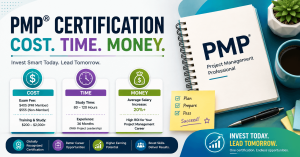
The PMP exam costs $575 USD for non-members and $284 USD for PMI members, with additional expenses for training, retakes, and renewals. PMI membership can lower your total cost and give you access to official resources.
How much does PMP training cost?
While PMI only charges for the exam, candidates usually spend $900 to $2,500 USD on training courses, bootcamps, or study guides. If you choose PMI Authorized Training Partners, expect costs on the higher end. Free resources exist, but most professionals prefer structured preparation to avoid re-takes.
Does PMI Membership Pay Off?
Yes! A PMI annual membership costs $109 USD, but it reduces your exam fee by $150 and your renewal fee by $90 USD. You can also get access to digital copies of the PMBOK Guide, member-only webinars, and local chapter networking.
How To Prepare For the PMP Certification Exam?
Passing this exam is going to take strategy, not just long hours of study. The exam tests how you apply project management concepts in real-world situations, so you will want to combine official PMI resources with practical practice. Here is how to make the most of your preparation:
- Start with PMI’s Official Materials
The PMBOK Guide and the Exam Content Outline should be your foundation. The PMBOK explains the processes, knowledge areas, and terminology PMI expects you to know, while ECO maps out the exact domains tested. Reading them first helps you avoid wasting time on irrelevant material and ensures your preparation stays aligned with the exam content.
| Is the PMBOK enough for the PMP exam? No. PMBOK gives you the theoretical base, but you need practice questions, updated study guides, and training support to handle scenario-based questions. |
- Use training and bootcamps wisely
Many professionals enroll in PMP training programs or intensive bootcamps because they provide structured learning and access to expert instructions. Pairing these with study guides can make even complex topics easier to digest.
- Engage in sufficient Practice
Reading theory alone won’t just cut it for this exam. Work through practice questions daily to test your understanding and get used to PMI’s question style. Reliable resources like Dumpsgate offer updated PMP practice questions, covering all key topics and mimicking the actual exam questions closely to give you a better sense of what to expect.
- Time Management is Key
Most candidates need 2 to 4 months of consistent study. Break your schedule into daily goals, mix reading with practice questions, and try to do weekly reviews.
Learn More: (Free + Paid) Best Project Management Courses Online In 2026
What Do You Need To Bring To The PMP Exam?
Exam day can, no doubt, feel very overwhelming. However, being prepared for this day helps you walk in with confidence. Here’s a look at what to expect and how to handle it smoothly:
➢Bring a valid ID: Make sure your government-issued ID matches your PMI application name
➢ Arrive early/ test your system: if at a center, arrive 30 minutes early; if online, complete the Pearson VUE system check the day before.
➢ Know what to bring (and what not to): only your ID is required. Personal items like phones, watches, notes, and food are not allowed. Lockers are usually provided at test centers.
➢ Time management: with 180 questions and 230 minutes, aim for about 75 seconds per question. Use the “mark for review” feature wisely.
➢ Mental preparation: take the optional breaks, breathe deeply, and reset your focus after each session
➢ Regional note: Some local PMI chapters publish test-centre guidelines in the native language. Read these to avoid any surprises.
What Happens After You Pass The PMP Exam?
Finishing the PMP exam feels like a huge weight off your shoulders. But once the relief sets in, the next question usually is: Now what?
⬩➤ When and How You Get Results
Right after you hit submit, you will see whether you passed. A few days later, PMI emails your official confirmation along with access to a downloadable certificate. That is when it starts to feel real.
⬩➤ Claiming Your Digital Badge
PMI also sends you a Credly link where you can grab your digital badge. It is worth setting this up right away because it is clickable proof for recruiters and hiring managers since anyone can verify it with one tap.
⬩➤ Adding PMP to LinkedIn and Resume
On LinkedIn, add it under “Licenses and Certifications” with the Project Management Institute as the issuer. Keep your headline simple but strong.
As for your resume, place “Project Management Professional” (PMP) right after your name or in the certification section.
⬩➤ Making It Work for Your Career
This is the part that many skip: actually using the credential. Ask your manager to consider you for the upcoming cross-department projects, volunteer for high-stakes initiatives, and let HR know about your new qualification. The letters “PMP” show that you can handle bigger responsibilities, but only if you raise your hand.
Discover More: Six Sigma vs PMP: Choosing The Right Certification Path for Your IT Career
What Are The Most Common PMP Mistakes and How Do You Avoid Them?
Even strong candidates slip up on the PMP journey. Anticipating these mistakes makes it easier to avoid delays, stress, and unnecessary exam retakes. Here are some of the common mistakes to avoid and how to fix them:

- Incomplete application details
Many candidates submit vague descriptions of their project work. PMI wants to see clear leadership examples tied to project phases. Therefore, try to use PMI’s terminology, initiation, planning, execution, monitoring, closing, and provide enough context to prove your role.
- Not preparing for an audit
Audits are random but common. Candidates scramble when asked for supervisor sign-offs or training certificates. Hence, collect your documents early and inform past supervisors so they are not caught off guard.
- Cramming instead of planning
The PMP exam is scenario-driven. Cramming only leaves you anxious. A way to tackle this is to spread preparation over weeks or months with a structured study plan that mixes reading, practice, and review
- Skipping Timed Practice
Some candidates know the material but underestimate the 4-hour endurance test. Take at least two full-length timed practice sessions to build focus, pacing, and confidence.
- Poor exam pacing
Spending 5 to 6 minutes on a single question means you will run out of time without finishing the exam. Aim for about 1 minute per question, flag the tough ones, and circle back during review. Practice can really help you get familiar with different question styles and improve your time management.
Plan early, practice realistically, and balance your study material to improve your chances of passing
How Do You Maintain Your PMP Certification?
Passing the exam is just the start. Keeping your PMP active means meeting PMI’s Continuing Certification Requirements (CCR). Every three years, you need to earn 60 PDUs (Professional Development Units) and report them through your PMI account.
Renewal Basis:
- Cycle length: 3 years
- Required PDUs: 60 total
- Renewal fee: Around $60 for PMI members, $150 USD for non-members.
Where To Earn PDUs
PMI splits PDUs into two categories:
- Education: training courses, webinars, or self-directed learning
- Giving back: mentoring, volunteering, or creating project management content.
You can also attend PMI chapter workshops, complete online courses from PMI-authorised partners, or volunteer to mentor junior PMs at work.
Using PMP To Build Career Momentum
Getting certified is surely a big win, but the real value comes from how you use that credential to open lucrative doors. This certification boosts credibility and creates opportunities you might not have had before. With the right strategy, you can turn those three letters into promotions, projects, and lasting career growth.
- Refresh Your Resume and LinkedIn
Highlight measurable outcomes from your projects. Instead of “managed a project rollout”, write, for example, “Delivered a $1 million software rollout 3 weeks early with a 10% cost saving”. Numbers stand out to recruiters.
- Position Yourself For Bigger Projects
Use your PMP certification as evidence of readiness when applying for leadership roles.
- Network With Purpose
Tap into local PMP chapters, regional conferences, or online communities. Speaking at an event or volunteering on a committee builds credibility and puts you in front of decision-makers.
- Negotiate With Confidence
Many companies align PMP with salary bands. Frame your certification as a benchmark for higher pay and increased responsibility.
To discover other popular project management certifications: 7 Topmost Project Management Certifications to Help Beginners in 2026
How To Get A Certification In Project Management? Final Thoughts
Where does PMP take you next? Finishing your PMP isn’t the end of the road, but the start of bigger opportunities. The exam shows you can manage complex projects, but how you use that credential is what sets you apart. Update your LinkedIn, highlight real project results, update your resume, and let your new title open doors to leadership roles. Keep in mind the certification needs, log your PDUs, stay active with PMI chapters, and keep learning so your credential stays current.
At the end of the day, PMP is all about proving that you are ready to lead. If career growth is your goal, this certification is one of the smartest investments you can make.
Frequently Asked Questions (FAQs)
How long does it take to get PMP certification?
It usually takes 3 to 6 months to prepare and pass the PMP exam. The exact timeline depends on your project management experience, study pace, and whether you use structured preparation resources.
How much does the PMP exam cost in 2026?
In 2026, the PMP exam costs $450 for members and $500 for non-members. Membership adds study benefits and discounts on renewal fees.
What counts as project hours for PMP?
Project hours include tasks where you led or contributed to planning, executing, or closing projects. Routine operations don’t count. PMI expects documented project-based work.
Can I take PMP without a degree?
Yes, but the requirements vary. Without a formal 4-year degree, you need 60 months of project management experience, plus 35 contact hours of project management education.
How many PDUs do I need to renew my PMP certification?
You must earn 60 PDUs every three years to maintain your certification. These can come from education, self learning, or giving back through mentoring or volunteering.
How soon will I get PMP results?
For computer-based tests, you can see your pass/fail result immediately on screen. An official confirmation email follows within a few days.
Can I take PMP online?
Yes! PMI offers online proctored exams through Pearson VUE. You will need a quiet environment, reliable internet, and system compatibility checks before scheduling.
Is the PMBOK enough to pass PMP?
No. PMBOK is helpful, but PMI designs the exam around multiple sources, including Agile and hybrid practices. Most candidates use preparation courses, guides, and practice questions to pass their exam.
Do I need work experience to apply for PMP?
Yes. PMI requires 36 to 60 months of project experience, depending on your education level, plus 35 hours of project management training.
Article Sources
- PMI. “Project Management Salary Survey, https://www.pmi.org/learning/careers/project-management-salary-survey.” Accessed February 2026.
- McKinsey & Company. “The next normal in construction, https://www.mckinsey.com/~/media/McKinsey/Industries/Capital%20Projects%20and%20Infrastructure/Our%20Insights/The%20next%20normal%20in%20construction/The-next-normal-in-construction.pdf.” Accessed February 2026.
- Deloitte. “Technology transformations are common, realizing its full potential value is not, https://www.deloitte.com/be/en/services/consulting/research/erp-transformation-business-impact.html.” Accessed February 2026.