Difficulty: High. Epic does not publish official pass rates for its certification exams. Estimated pass rate: Unclear and unverified at the exam level; the passing score is commonly cited around 80%. An often-repeated “3% success rate” figure floating around Reddit and Quora actually measures the entire hiring-to-certification funnel (skills screening, training, exam, and interviews combined), not the exam alone, and Epic has never confirmed it. Prep reality: You cannot self-enroll. You need employer or Epic-partner sponsorship, then 6 to 12 weeks of structured training before you sit the exam.
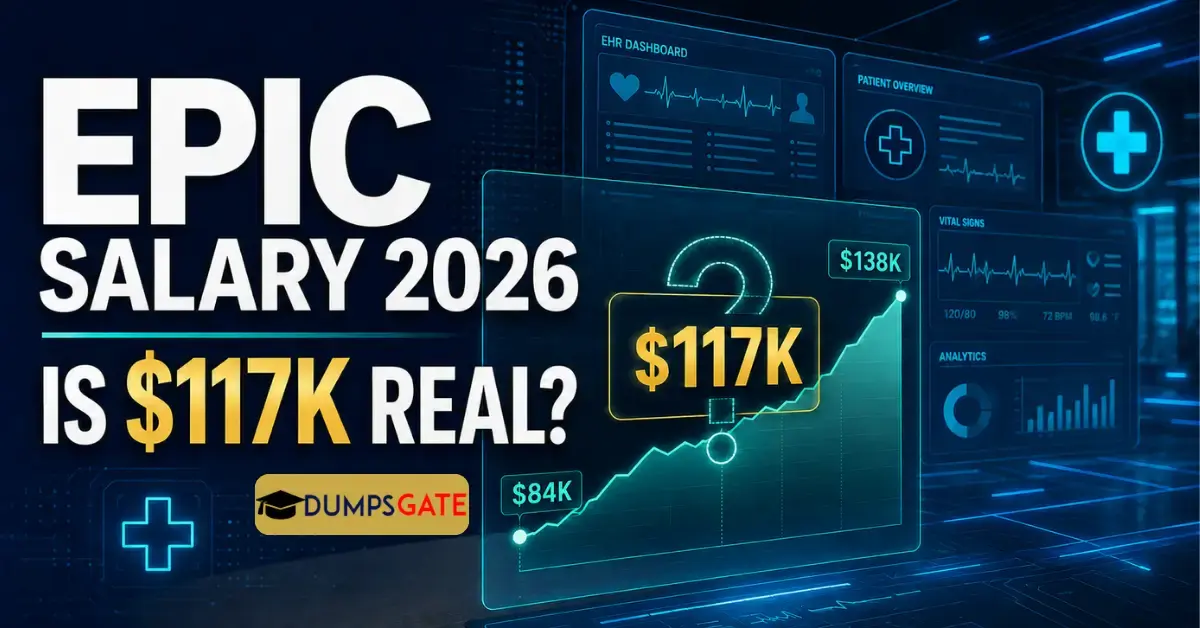
The salary number: As of mid-2026, Epic-certified professionals in the US average $117,555 a year ($56.52/hour), per ZipRecruiter’s aggregated job data. Role-specific benchmarks from Salary.com and Glassdoor place actual pay anywhere from $82,000 (Application Analyst) to $134,000+ (Business Analyst, Project Manager). Entry-level certified analysts start closer to $84,000; senior analysts and project managers clear $120,000 to $135,000. California, DC, and the Northeast pay 10 to 25% above the national average.
That headline number hides a lot. Below is the breakdown by role, level, state, city, and country, plus what the certification actually costs and how to negotiate once you have it.
What Is Epic Certification
Epic Certification is a credential issued by Epic Systems Corporation to professionals who complete training and pass an exam in a specific software module (Cadence, Willow, Beacon, Cupid, Resolute, ClinDoc, and others). It is not a public course. You need sponsorship from a healthcare organization that runs Epic, an Epic partner, or Epic itself. This gatekeeping is exactly why certified professionals command a pay premium over uncertified EHR staff.
Demand for the credential tracks Epic’s hospital footprint. Epic now holds 43.7% of the US acute care hospital market and 56.9% of hospital beds as of the 2026 KLAS market share report, up from 42.3% a year earlier, and every large health system (10+ hospitals) that switched EHR vendors in 2025 chose Epic. More Epic go-lives means a steady pipeline of open analyst, coordinator, and trainer roles.
Epic Certified vs. Epic Proficient vs. Epic Credentialed Trainer
These three terms get used interchangeably in job postings, and they are not the same thing:
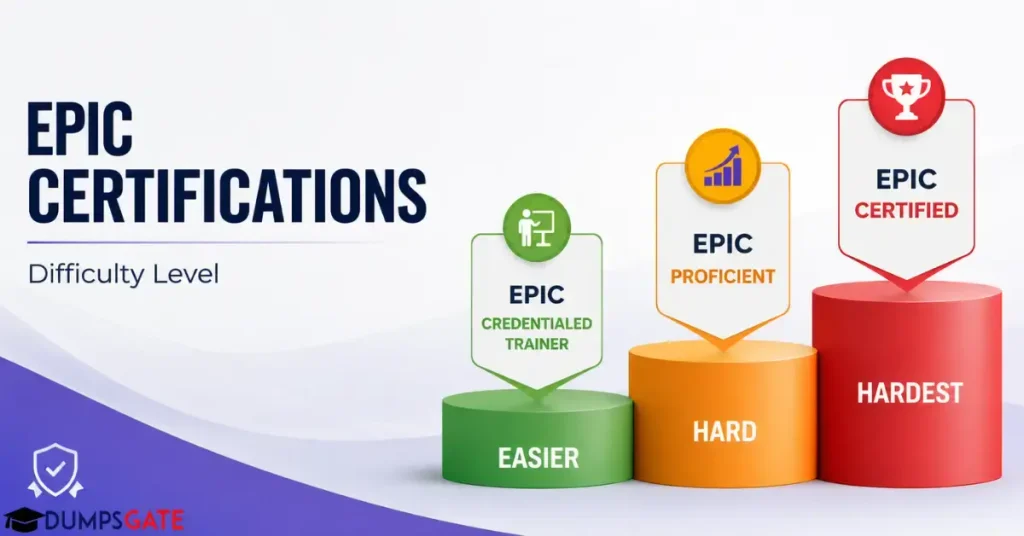
| Credential | How You Get It | Employer Cost | Difficulty |
| Epic Certified | Sponsor sends you to Epic’s Verona, WI campus (or an approved remote track) for instructor-led classes, then you pass the exam | Highest; travel plus class fees | Hardest; full build and configuration competency |
| Epic Proficient | Self-study on Epic’s UserWeb with employer permission, no travel or class fees, then you sit the same exam at a slightly lower required score | Lowest | Hard; requires strong self-discipline without live instruction |
| Epic Credentialed Trainer | Employer-run training program (no Epic-run classes), qualifies you to train end users, not to build or configure the system | Low | Easier; workflow-focused, not a substitute for analyst certification |
A Credentialed Trainer role is the most common entry point for clinicians moving into Epic careers, since it doesn’t require certification first and can lead to sponsorship for full certification later. For a deeper walkthrough of each path, Healthcare IT Skills’ certification breakdown is a solid independent resource.
Get insights in the detailed guide to know more about Epic certification: Boost Your Healthcare IT Career in 2026 With Epic Certification
Epic Certification Salary by Role in the USA (2026)
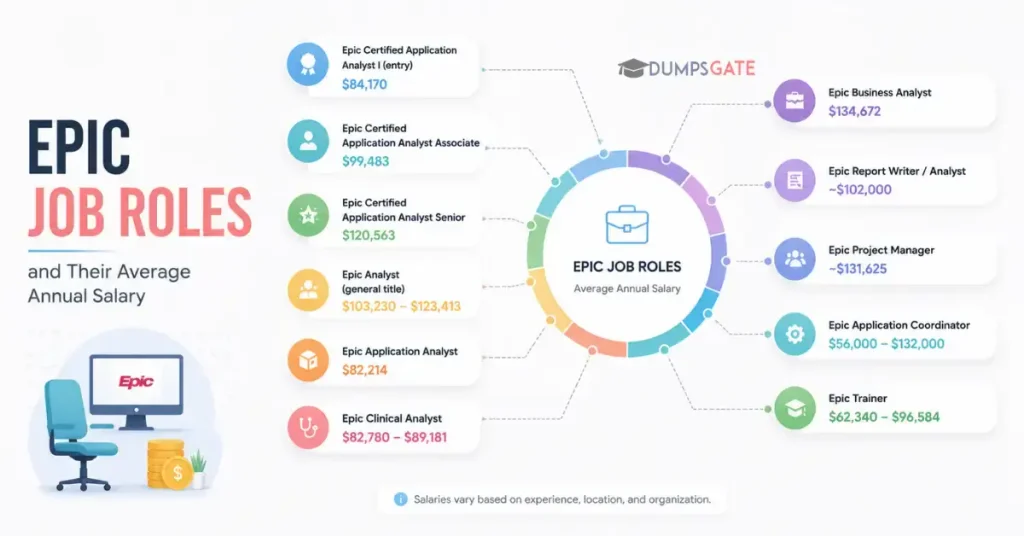
| Role | Average Annual Salary | Typical Range | Source |
| Epic Certified Application Analyst I (entry) | $84,170 | $69,173 to $97,620 | Salary.com |
| Epic Certified Application Analyst Associate | $99,483 | $81,276 to $112,742 | Salary.com |
| Epic Certified Application Analyst Senior | $120,563 | $110,361 to $132,580 | Salary.com |
| Epic Analyst (general title) | $103,230 to $123,413 | $77,496 to $176,000 | Salary.com, ZipRecruiter |
| Epic Application Analyst | $82,214 | $69,000 to $95,000 | Salary.com |
| Epic Clinical Analyst | $82,780 to $89,181 | $65,500 to $95,000 | Salary.com, ZipRecruiter |
| Epic Business Analyst | $134,672 | Varies by employer | Salary.com |
| Epic Report Writer / Analyst | ~$102,000 | $89,190 to $113,390 | Salary.com |
| Epic Project Manager | ~$131,625 | $103,335 to $166,400 | Salary.com, UoPeople compiled data |
| Epic Application Coordinator | $56,000 to $132,000 | Wide by scope (junior coordinator vs. senior PM-coordinator hybrid) | Salary.com |
| Epic Trainer | $62,340 to $96,584 | Wide by employer and region | Payscale, compiled data |
The spread on Coordinator and Trainer roles is real, not a data error. Employers use these titles inconsistently, so a “coordinator” at one hospital may do entry-level ticket triage, while at another it may be a senior build-and-governance role. For the full breakdown behind the Associate-level figures, see Salary.com’s Epic Certified Application Analyst Associate page; Trainer figures pull from Payscale’s Epic Certification data.
Epic Certification Salary by Experience Level
| Level | Years of Experience | Average Annual Salary |
| Entry (Analyst I) | 0 to 2 years | $84,170 |
| Associate | 2 to 4 years | $99,483 |
| Senior | 4 to 7+ years | $120,563 |
Entry-level Epic Analyst salary ranges from $84,000 to $88,000, depending on region and module, per Salary.com and UoPeople’s compiled 2026 data. Multiple certifications and Go-Live implementation experience are what push someone from Associate to Senior faster than tenure alone.
Learn more about: Best and Gold Standard Medical Coding Certifications in Healthcare Industry
Epic Certification Salary by US State
| State | Average Annual Salary |
| District of Columbia | $114,296 |
| California | $113,863 |
| Massachusetts | $112,345 |
| Washington | $111,932 |
| New Jersey | $111,891 |
| Alaska | $111,746 |
| Connecticut | $110,322 |
| New York | $109,744 |
| Hawaii | $107,896 |
| Minnesota | $105,635 |
| Colorado | $105,326 |
| Illinois | $105,222 |
| Oregon | $104,830 |
| Virginia | $103,953 |
| Pennsylvania | $102,765 |
| Wisconsin | $101,547 |
| Michigan | $101,661 |
| Texas | $100,691 |
Source: Salary.com, Epic Analyst state data, August 2026. Not every state is separately tracked; states not listed typically land close to the $100,000 to $103,000 national midpoint.
Epic Certification Salary Near San Francisco, CA and San Jose, CA
These two cities show up in search more than any others, and for good reason:
- San Francisco, CA: $138,005/year average ($66.35/hour), roughly 15 to 27% above the national average depending on which dataset you compare it against.
- San Jose, CA: ~$66.00/hour average, which annualizes to roughly $137,280/year at standard full-time hours.
Both cities also show the widest spread between 25th and 90th percentile pay (as much as $80,000+), which tracks with the concentration of large hospital systems and Epic consulting firms headquartered or heavily staffed in the Bay Area.
Other High-Paying Metros and Remote Roles
| Location | Average Annual Salary |
| New York, NY (Epic Certified) | $128,520 |
| Boston, MA (Application Analyst Associate) | $110,953 |
| Washington, DC (statewide average) | $114,296 |
| Remote (nationwide) | $86,200 to $117,135 depending on source and role scope |
Remote Epic roles are genuinely common (job boards list 1,000+ live remote postings at any given time), but pay averages 10 to 15% below on-site Bay Area or DC rates, per Glassdoor’s remote-specific salary data. ZipRecruiter’s broader remote dataset puts the average closer to the national on-site figure, so treat remote pay as “at or slightly below national average” rather than a discount across the board.
Epic Certification Salary Globally
| Country | Average Annual Pay | Notes |
| United States | $117,555 USD ($56.52/hr) | National average, Epic Certified, ZipRecruiter |
| Canada | CAD $89,791/year | Glassdoor Canada, Epic Analyst role |
| India | ₹7,12,500/year (~₹343/hr) | Glassdoor India, Epic Application/Systems Analyst; hits ₹10.8 lakh to ₹16 lakh in metro hubs like Hyderabad |
The US remains the highest-paying market by a wide margin because Epic dominates US hospital EHR market share, and most large health systems running Epic are US-based. India’s figures, pulled from Glassdoor India’s Epic Systems Analyst data, reflect a much smaller and newer certified talent pool.
Epic Certification Salary Per Hour
At the national average, Epic-certified pay works out to roughly $56.52/hour. By role:
- Entry-level Analyst I: approximately $33 to $47/hour
- Associate Analyst: approximately $39 to $54/hour
- Senior Analyst: approximately $53 to $64/hour
- San Francisco / San Jose market rate: $47 to $91/hour depending on module and contract vs. full-time status
Contract and locum Epic consultants working short-term Go-Live support assignments often bill at the higher end of these ranges, sometimes above $100/hour, since employers pay for speed and zero ramp-up time. Indeed’s Epic Clinical Analyst salary page tracks a similar spread for clinically focused analyst roles.
Epic Certification Cost in 2026
You don’t buy Epic certification off a shelf. The realistic cost breakdown:
- Total cost range: $500 to $10,000, averaging around $5,000, according to multiple 2026 healthcare IT career resources.
- Per-course training cost: $2,000 to $4,000 if you pursue it through a third-party or independent training provider, per ZipRecruiter’s compiled cost data.
- Who actually pays: In the large majority of cases, your employer or the Epic-using healthcare organization sponsoring you covers training, exam fees, and often travel to Epic’s Verona, Wisconsin campus for in-person components.
- Self-funded path: If you pursue this independently (not yet employed by an Epic client), expect $2,000 to $5,000 out of pocket for third-party prep, since Epic does not sell certification directly to individuals.
How Long Does Epic Certification Last?
Unlike AWS or PMP, Epic certification doesn’t run on a fixed multi-year clock. It’s maintained through Continuing Epic Education (CEE), which is tied to Epic’s version release cycle rather than a calendar date. In practice, this means:
- You complete New Version Training (NVT) or an Application Essentials assessment roughly every time Epic ships a major version, commonly cited as a 1- to 2-year rhythm.
- Miss the deadline and your certification lapses; you cannot simply pay a renewal fee to reinstate it; you have to retake the exams for the current version.
- Consultants who work across multiple modules often let low-priority certifications lapse deliberately rather than spend CEE hours on a module they no longer use.
For specifics on what CEE requires each cycle, Healthcare IT Leaders’ CEE breakdown covers the Application Essentials assessment and NVT requirements in detail.
Read more: The Ultimate RHIA Certification Guide
Companies and Staffing Firms Hiring Epic-Certified Professionals
Direct hospital and health system employers actively hiring Epic-certified analysts in 2026 include Kaiser Permanente, Cleveland Clinic, Mayo Clinic, Mass General Brigham, and regional systems like Mercy and Providence. Beyond direct hire, a large share of Epic roles run through specialized staffing and consulting firms:
- Healthcare IT-focused staffing firms: Medix Technology, Healthcare IT Leaders, CereCore, HCTec
- Global consulting and implementation partners: Accenture, Tech Mahindra-backed HCI Group
- Direct Epic Systems roles: Based at Epic’s Verona, Wisconsin headquarters
The global healthcare staffing market was valued at $44 billion in 2024 and is projected to reach $78 billion by 2033, a 6.3% annual growth rate, which helps explain why demand for certified Epic talent continues to outpace supply.
Job Outlook for Epic-Certified Professionals
The US Bureau of Labor Statistics tracks Epic analyst-type roles under “Health Information Technologists and Medical Registrars,” a broader occupational category with a median annual wage of $67,310 as of May 2024. That category is projected to grow 15% from 2024 to 2034, far faster than the average for all occupations, with about 3,200 openings projected each year nationally.
That’s the baseline occupation-wide figure; Epic-specific certified roles sit well above that median, as the role and level tables above show. The growth rate matters more than the median here: it supports the job-security angle and aligns with Epic’s own five-year hospital growth trend of a net 568 hospitals added since 2021.
Factors That Affect Epic Certification Salary
- Module scarcity. Certifications in high-demand or complex modules (Beacon oncology, Cupid cardiology, Willow pharmacy) pay more than common ambulatory modules because fewer analysts hold them.
- Number of certifications. Multi-certified analysts routinely earn 15 to 25% more than single-certification peers.
- Employer type. Large enterprise health systems (5,000+ employees) pay meaningfully more than small clinics; Salary.com places enterprise-level pay around $106,000 to $128,000 versus lower averages at smaller organizations.
- Geography and cost of living. Coastal metros (San Francisco, San Jose, Boston, DC, New York) consistently outpace the Midwest and South by 10 to 27%.
- Contract vs. full-time status. Short-term Go-Live and implementation contracts pay a premium hourly rate but without benefits or long-term stability.
- Clinical background. Analysts who are also RNs, pharmacists, or have direct clinical experience often negotiate higher starting offers because they need less workflow context-building.
Epic Certification Salary Negotiation Tips
- Lead with certification scarcity, not tenure. A single active certification in an in-demand module is a stronger lever than years of general IT experience.
- Ask for the Go-Live or implementation-phase rate if the role involves an active rollout; these assignments pay above standard support-phase salaries.
- Benchmark against Salary.com’s enterprise-size breakdowns before countering an offer, since company size alone shifts pay by 10 to 20%.
- If relocation isn’t an option, negotiate for remote work; several consulting firms pay Bay Area-adjacent rates for fully remote certified analysts on national contracts.
Can You Get Epic Certification Training Online for Free?
Not independently, no, and this is one of the most common misconceptions searched around this topic. Epic does not sell or license certification training to the public. The only paths in:
- Get hired by an Epic-using hospital, health system, or a certified Epic partner/consulting firm, which sponsors your training.
- Get hired directly by Epic Systems in Verona, Wisconsin.
Once sponsored, self-study materials on Epic’s internal UserWeb portal are free to access, and the self-study proficiency track itself typically has no course fee beyond a modest exam charge. You can’t register for UserWeb or sit a certification exam without an active affiliation with an Epic client or partner organization, a limitation uPerform’s training resource guide confirms in more detail.
Is Epic Certification Worth It? The Verdict
Run the actual numbers instead of the general “yes, healthcare IT is growing” answer:
- Cost to you directly: In most cases, $0. Employer sponsorship covers training, exam fees, and travel. Only self-funded, independent prep (rare, since Epic requires sponsorship to access training in the first place) runs $2,000 to $5,000.
- Pay jump by level: Moving from entry-level Analyst I ($84,170) to Associate ($99,483) to Senior ($120,563) roughly doubles your Application Analyst-track pay over a typical 4 to 7-year span, per Salary.com’s career-stage data.
- Specific skill premiums that stack on top: Salary.com’s compensation data attaches concrete percentage lifts to specific skills within certified analyst roles: Integrated Care experience adds up to 18%, System Testing up to 13%, Ambulatory Care up to 12%, and Enterprise Applications up to 9%. These compound with base certification pay rather than replace it.
- Where it’s a weaker bet: If you’re already senior in a non-Epic EHR (Oracle Health/Cerner, Meditech) and your employer has no Epic plans, the certification doesn’t transfer value until you change employers, since it’s tied to Epic-affiliated sponsorship.
Bottom line: for anyone already inside or entering an Epic-using health system, certification is a low-cost, high-return move. The real barrier isn’t the exam; it’s getting sponsored in the first place.
Epic Certification Interview Questions to Expect in 2026
- Walk through how you would handle a physician-requested change to a clinical workflow build, including how you would test it before go-live.
- How do you prioritize a ticket queue during a system Go-Live when multiple departments report issues simultaneously?
- Describe your experience with Clarity or Reporting Workbench and how you would build a report a stakeholder needs but hasn’t fully specified.
- How would you explain a system change to non-technical clinical staff who are resistant to workflow changes?
- What is your process for staying current on module updates between Epic’s biannual releases?
- Tell us about a time a build decision you made had an unintended downstream effect, and how you resolved it.
FAQs
Is Epic certification worth it in 2026?
For most healthcare IT professionals, yes. Certified analysts consistently out-earn uncertified EHR staff by a wide margin, and demand continues to outpace the supply of certified talent, particularly in specialty modules.
What is Epic certification salary per hour?
The national average is about $56.52/hour, with entry-level roles closer to $33 to $47/hour and senior or Bay Area roles reaching $60 to $91/hour.
How much does Epic certification cost?
Typically $500 to $10,000, averaging around $5,000, though most candidates never pay this directly since employers usually sponsor the training and exam fees.
What is the Epic Analyst entry-level salary?
Roughly $84,000 to $88,000 nationally, with California and Northeast metros pushing entry-level offers above $95,000.
What do people say about Epic certification salary on Reddit?
Informal accounts on Reddit and healthcare IT forums generally describe a 30 to 40% pay bump after certification, with some users reporting first-year certified roles landing in the $120,000 to $150,000 range in high cost-of-living metros. These are anecdotal and not a substitute for the benchmarked data above.
Is the Epic certification exam hard?
Yes, by most accounts. Epic does not publish official difficulty ratings or pass rates, but the material is described consistently as dense and workflow-heavy rather than purely memorization-based.
Can I train for Epic certification online for free without an employer?
No. Free self-study materials exist, but only after you already have sponsorship and UserWeb access through an Epic-affiliated employer or partner.
Does Epic certification expire?
It doesn’t expire on a fixed calendar, but it lapses if you skip Continuing Epic Education requirements tied to each new version release, roughly every 1 to 2 years.
What’s the difference between Epic certified and Epic proficient?
Certified means Epic trained you directly (travel plus instructor-led classes); proficient means you self-studied with employer permission and passed the same exam at a slightly lower required score. Both are valid credentials; certified typically carries more weight with larger employers.
Can Epic certified analysts work remotely?
Yes, remote Epic analyst postings are common, but average pay runs about 10 to 15% below on-site Bay Area or DC rates, landing closer to $86,000 to $117,000 a year depending on the role and dataset.
Is Epic certification salary higher than non-certified EHR analyst pay?
Yes, consistently. Certified analysts start at $84,000-plus versus lower averages for uncertified application support staff, and specific in-demand skills add another 9 to 18% on top, per Salary.com’s compensation data.